
Roofing cost in Cumberland, IN varies widely based on materials, roof size, and local labor—and this guide explains every factor so you can budget with confidence before you call a single contractor. Cumberland Roof Masters, a roofing company serving Cumberland and the surrounding Central Indiana communities, offers free inspections and written estimates so you know exactly what you're paying before any work begins. Use the sections below to explore every element of roof pricing, then reach out to a Cumberland roofing contractor like us when you're ready for a number specific to your home.
Last updated: 2026
Explore Specific Cost Pages
- Roof Repair Cost — Detailed breakdown of repair pricing by damage type and scope
- Roof Replacement Cost — Full replacement pricing by material, size, and complexity
- Metal Roof Cost — Standing seam, corrugated, and steel panel pricing explained
How much does roofing cost in Cumberland, IN?
Roofing cost in Cumberland, IN follows Central Indiana labor rates, which are at or slightly below the national average—making this region generally more affordable than coastal markets. National estimates place roof replacement in the $7,000–$25,000+ range, but that spread reflects enormous variation in home size, material choice, and roof complexity. Those figures are a planning reference, not a quote for your specific house.
Cumberland sits in Marion County and experiences a full Midwest four-season climate: hot, humid summers that expand and contract roofing materials, freeze-thaw cycles through winter that stress seams and flashings, and spring hail events that can accelerate shingle granule loss. Homes in Cumberland's established residential neighborhoods are largely 1,960s–1,990s construction, meaning many roofs are approaching or past their replacement window. Older decking, non-standard framing, and original drip edges can all add scope to a project.
The only way to get an accurate roofing cost for your Cumberland home is a free on-site inspection—which is exactly where the next section begins.
Free, no-obligation estimates
Talk to Cumberland Roof Masters
Tell us what you need and we’ll take it from there.
What is the average cost of a roof for a 2,000-square-foot house?
For a 2,000-square-foot home with standard asphalt shingles, national estimates typically run $7,000–$15,500, depending on pitch, tear-off requirements, and regional labor. That range is a national benchmark; a low-slope ranch in Cumberland may land toward the lower end, while a steeply pitched two-story with dormers and multiple valleys will push toward or beyond the top of that range.
One detail many guides omit: your roof's square footage is almost never the same as your home's square footage. A 2,000 sq ft footprint on a steeply pitched roof can yield 2,400–2,800 sq ft or more of actual roofing surface once slope is calculated. Contractors price by roofing square (100 sq ft), so slope directly multiplies both material and labor costs. We measure the actual surface—not the floor plan—when preparing your estimate.
Material choice is the second-biggest lever on that final number, which the next section covers in detail.
At a glance
What drives the price of a roof?
Seven factors account for most of the difference between a low quote and a high one on the same house.
| Cost Factor | Why It Matters | Typical Impact |
|---|---|---|
| Roof size (squares) | More surface = more material and more labor hours | High — the base multiplier for everything else |
| Pitch and steepness | Steep roofs require safety equipment, slow production, and more shingle waste | High — can add 20–40% to base price |
| Material selected | Asphalt, metal, slate, wood, and tile differ sharply in material cost and installation time | High — see material table below |
| Number of tear-off layers | Indiana code limits shingle layers; older homes with two existing layers require full tear-off and disposal | Medium-High — adds labor and haul-away costs |
| Decking condition | Rotted or soft sheathing found during tear-off must be replaced before new shingles go on | Medium — unpredictable until decking is exposed |
| Roof complexity | Valleys, dormers, chimneys, skylights, and multiple planes increase cutting and flashing labor | Medium — each penetration adds scope |
| Permits and local codes | Marion County permits are required for replacement; permit fees and inspection scheduling add time and cost | Low-Medium — but non-negotiable |
Indiana labor rates run near or slightly below national averages, which helps offset material costs that are largely market-driven nationwide. Understanding what shingle and material pricing looks like on its own is a useful next step.
How much does it roughly cost to replace a roof?
A full roof replacement nationally spans roughly $7,000 to $25,000+, with the spread explained almost entirely by the factors in the table above. Budget the lower end for a small, simple, single-story home with standard 3-tab asphalt shingles and a modest pitch. Budget the higher end—or beyond—for a larger home, premium materials, steep pitch, or significant decking damage discovered at tear-off.
We provide written quotes after a free inspection so you have a fixed scope, not a range, before agreeing to any work. The quote covers tear-off, disposal, decking repairs if identified, underlayment, drip edge, flashing, shingles or chosen material, and cleanup. No line item should surprise you on completion day.
Shingle pricing is the most searched sub-topic within replacement cost—here's what that looks like.
At a glance
How much do roof shingles cost?
Asphalt shingles are the most common roofing material in Indiana and carry the lowest entry-level price of any option. National cost-per-square-foot ranges, combined material and installation, break down as follows.
| Material | Installed Cost Range (national, per sq ft) | Typical Lifespan | Notes |
|---|---|---|---|
| 3-tab asphalt shingles | $1.50 – $3.50 | 15–20 years | Lowest cost; widely available; least wind resistance |
| Architectural (dimensional) asphalt | $3.00 – $5.50 | 25–30 years | Most popular choice in Central Indiana; better wind rating |
| Wood shakes | $4.50 – $9.00 | 20–40 years | Requires ventilation; check local fire codes |
| Metal (steel/aluminum panels) | $5.00 – $12.00+ | 40–70 years | Excellent hail and ice resistance for Indiana winters |
| Clay or concrete tile | $6.50 – $15.00 | 50–100 years | Heavy; verify structural capacity before specifying |
| Slate | $10.00 – $20.00+ | 75–200 years | Premium material; requires specialist installation |
These are national ranges provided as a planning reference. Verify actual shingle prices and installed cost with a local written estimate from Cumberland Roof Masters.
Architectural asphalt shingles are the most common choice we see in Cumberland because they balance upfront cost, wind resistance (important in open Marion County terrain), and a lifespan that suits the typical homeowner's planning horizon. If you're considering a premium option, slate deserves its own section.
How much does a slate roof cost?
Slate roof installation is the highest-cost roofing option available, with installed costs running $10–$20+ per square foot nationally—placing a typical home well above the cost of any asphalt or metal alternative. That price reflects the material itself (a quarried natural stone), the specialized installation skills required, the additional structural load slate places on a roof system, and the longer project timeline.
The case for slate is longevity: a properly installed natural slate roof can last 75–200 years, meaning one installation may outlast the homeowner and several subsequent owners. For historic homes or homeowners making a generational investment, the math can favor slate over repeated asphalt replacements. Synthetic slate products exist at a lower price point and warrant a conversation during your estimate if you like the look but not the weight.
Read moreShow less
Before booking any slate work, we inspect the existing deck and framing to confirm load capacity—skipping that step is a structural risk. Regular inspections are part of maintaining any roof's lifespan, and that brings up a commonly asked cost question.
How much does a roof inspection cost?
A professional roof inspection from Cumberland Roof Masters is free—no charge for the visit, the written report, or the estimate that follows. We offer free inspections because an accurate quote requires seeing the actual roof, not estimating from a floor plan or satellite image.
Some third-party home inspectors charge $100–$300 for a roof inspection as part of a broader home inspection, which is common in real estate transactions where the inspector works for the buyer rather than a roofing contractor. If you need an independent inspection for a purchase or insurance purpose, that fee reflects the inspector's neutrality and report documentation. For repair or replacement planning, our free inspection gives you the same on-roof detail with no cost obligation.
Read moreShow less
Indiana's freeze-thaw cycles and spring hail seasons make annual inspections a practical habit—damage caught early costs far less to repair than damage found after water has reached the decking. If skylights are part of your roof system, those get specific attention during every inspection.
How much does skylight installation cost?
Skylight installation cost depends on the skylight unit selected, the number of units, roof pitch, and whether flashing and curbing need to be built from scratch or replaced around an existing opening. Nationally, installed costs for a single skylight range from roughly $900 to $2,500+ for standard fixed or venting units; larger or tubular models and those requiring deck cutting on a steep pitch move toward the higher end.
The flashing detail around a skylight is the most failure-prone point in many roof systems, particularly in Indiana where ice damming can force water under improperly sealed curbs. We treat skylight flashing as a primary focus during installation and inspection—not an afterthought. If you're adding skylights during a full re-roof, the timing reduces labor cost because the deck is already exposed.
Roof vents are another penetration type with their own cost and installation considerations.
How much does it cost to install roof vents?
Roof vent installation cost varies by vent type—ridge vents, box vents, power attic ventilators, and soffit vents each carry different material and labor costs. A single box vent typically runs $150–$350 installed; a full ridge vent system for a medium-sized home may run $300–$650+ in material and labor combined, depending on ridge length and existing conditions.
Proper ventilation is not optional in Central Indiana. Without balanced intake and exhaust airflow, summer attic heat accelerates shingle degradation, and winter moisture buildup causes decking rot and ice dam formation along eaves—a known issue in freeze-thaw climates like Marion County. We assess your attic's current ventilation ratio during inspection and recommend only what the attic actually needs to meet code and protect the roof system.
All of these costs add up differently depending on the season and your approach to replacing the roof—which the next two sections address directly.
What's the cheapest way to replace your roof?
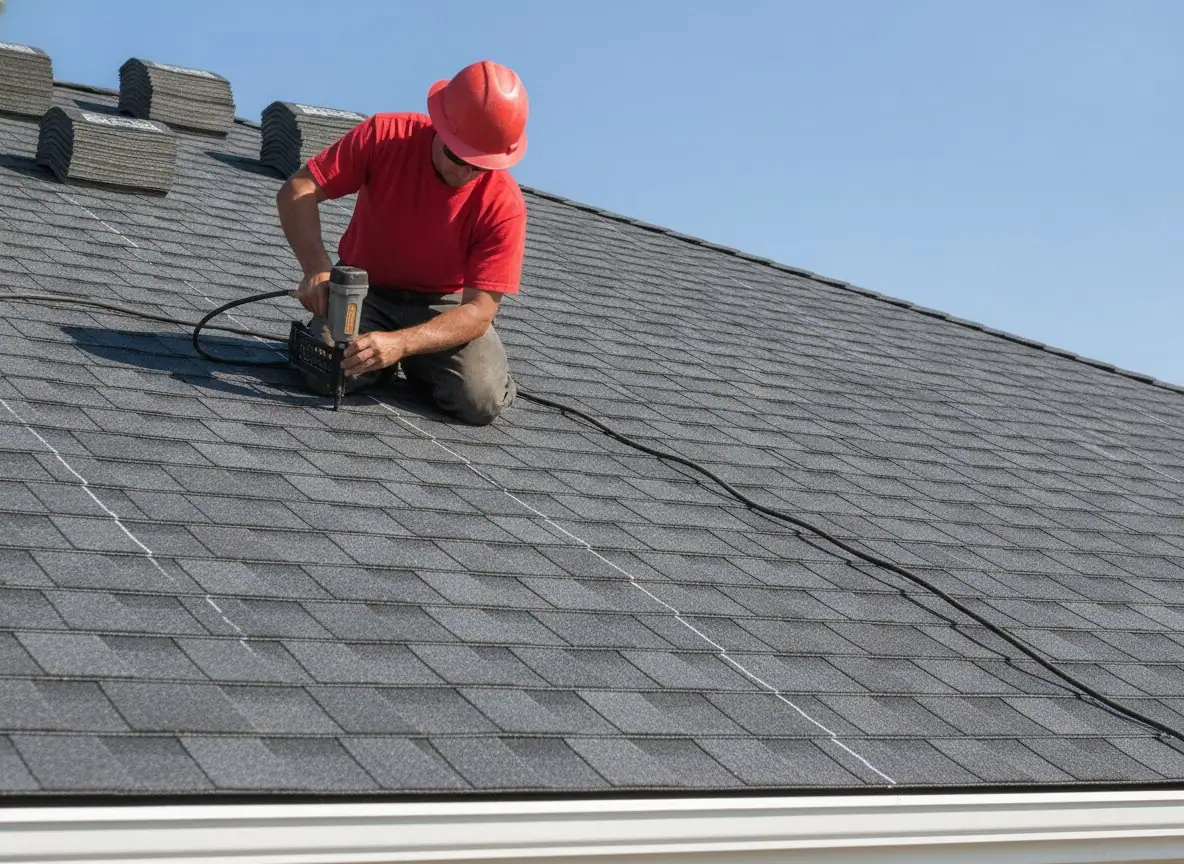
The cheapest structurally sound approach to roof replacement is standard architectural asphalt shingles installed over a full tear-off with no deferred decking repairs. Skipping tear-off by overlaying new shingles on old ones may appear to save money but typically voids manufacturer warranties, hides existing damage, and adds weight that shortens the new roof's life—so we do not recommend it.
Practical ways to reduce legitimate replacement cost include: scheduling during the off-peak season (see next section), combining the replacement with any skylight or vent work you've been planning so labor isn't mobilized twice, and accepting standard colors and profiles rather than premium designer shingles. Getting at least two written, itemized quotes—not verbal estimates—lets you compare scope, not just price.
What is the cheapest month for roofing?
Late fall and winter months—typically November through February in Indiana—tend to bring lower demand and, in some cases, more negotiable pricing from roofing contractors. Manufacturer rebates on shingles also often run in winter. The tradeoff is weather dependency: cold temperatures below 40°F affect asphalt shingle sealant activation, requiring contractors to hand-seal tabs and time installations around temperature windows.
Spring and summer are peak demand seasons in Central Indiana, particularly after hail events that can send insurance claims surging across multiple neighborhoods at once. Scheduling before storm season or immediately after the busy fall rush gives you a better contractor availability window and sometimes a better price. We serve Cumberland and surrounding areas including Lawrence, McCordsville, Fishers, Fortville, Greenfield, Beech Grove, and Indianapolis year-round, including 24/7 emergency service when weather damage can't wait for a seasonal discount.
Will homeowners insurance pay for a new roof?
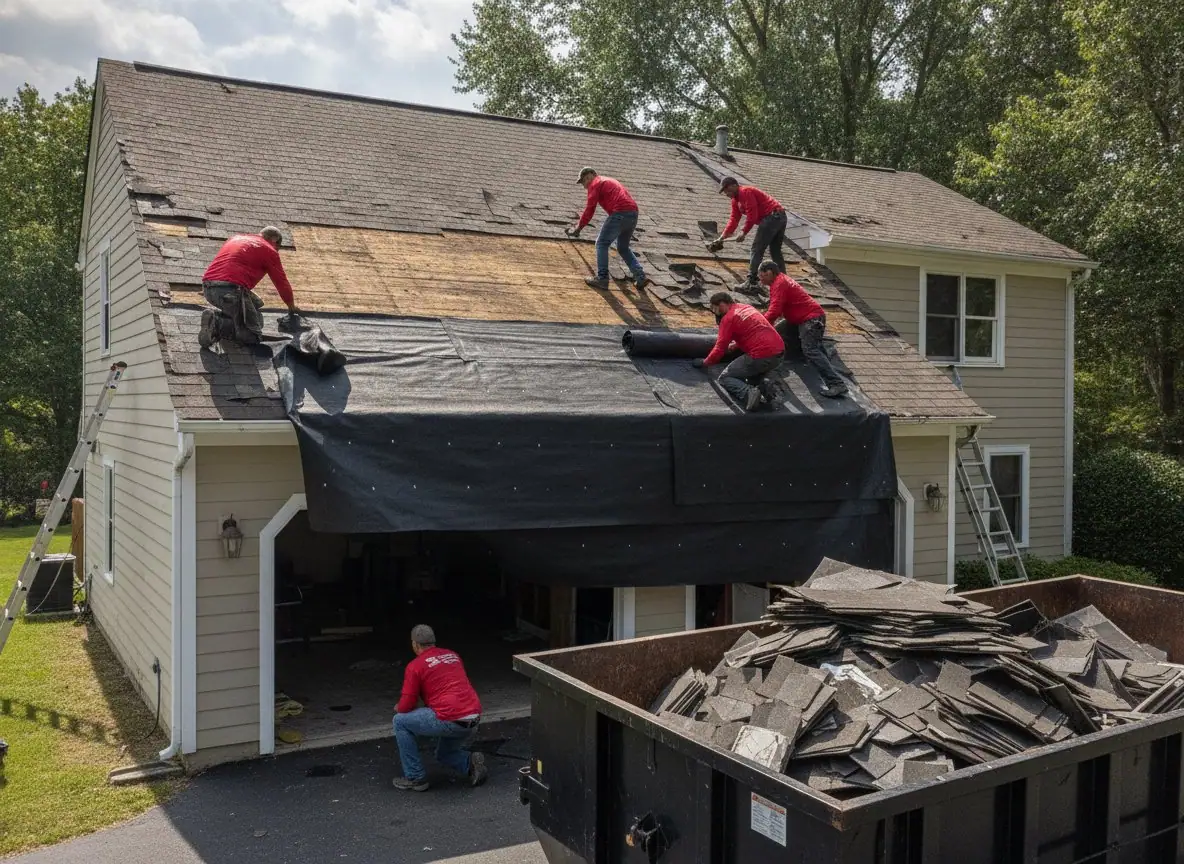
Homeowners insurance typically covers roof replacement when damage results from a covered peril—hail, wind, falling trees, and similar sudden events are the most common triggers in Central Indiana. Gradual deterioration, age-related wear, and poor maintenance are generally excluded. The distinction matters enormously: an adjuster will assess whether damage is storm-related or age-related, and that determination drives the claim outcome.
We help homeowners navigate insurance claims. That means documenting storm damage thoroughly during our inspection, providing detailed written reports that support your claim, and communicating with adjusters on scope. You are responsible for your deductible; any contractor who offers to "waive" your deductible is likely violating Indiana insurance law—a significant red flag.
Financing is also available through us for homeowners whose project falls outside insurance coverage or whose deductible creates a gap. Financing can cover both repairs and full replacements.
What is the average lifespan of a roof?
Roof lifespan varies significantly by material: asphalt shingles last 15–30 years, wood shakes 20–40 years, metal roofing 40–70 years, clay or concrete tile 50–100 years, and natural slate 75–200 years. Those are material lifespans under good conditions; Indiana's freeze-thaw cycles, UV exposure, and hail events can shorten an asphalt roof's service life toward the lower end of its range if ventilation is poor or minor damage goes unaddressed.
A practical decision rule: if your asphalt roof is under 15 years old and damage is isolated, repair is almost always the right financial decision. Between 15 and 20 years, the answer depends on damage extent and remaining shingle integrity—inspection tells you which applies. Beyond 20–25 years on asphalt, replacement typically offers better long-term value than continued repairs because the shingles have lost significant granule coverage and are approaching systemic failure. We assess age, granule loss, and decking condition during every free inspection to give you a clear recommendation rather than a sales pitch.
How do you get an accurate roofing estimate?
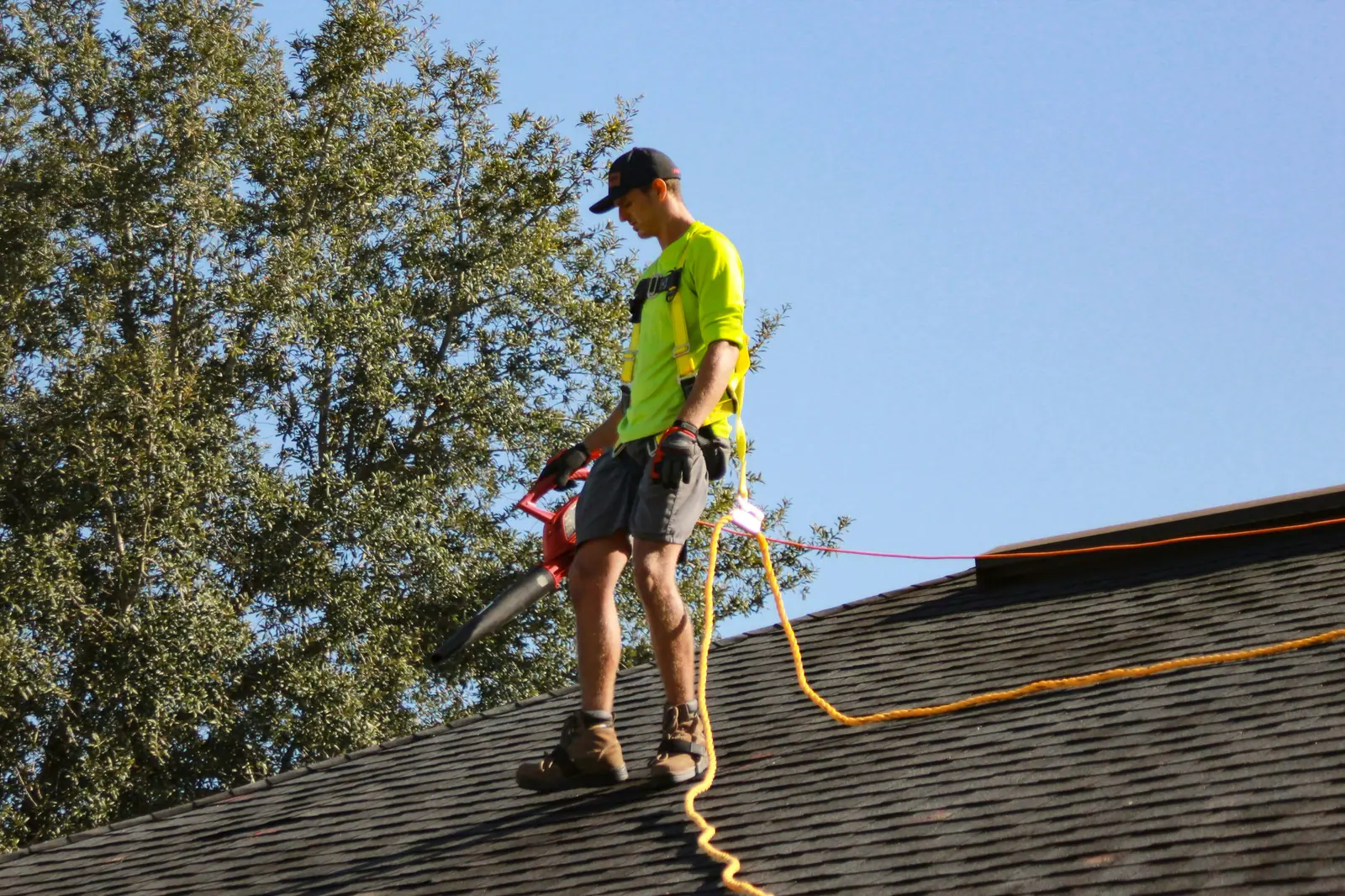
An accurate roofing estimate requires a physical inspection of the actual roof—not a satellite measurement alone and not a per-square-foot guess over the phone. Here is what to have ready and what to expect.
Estimate Checklist
- Roof size: Know your home's square footage as a starting point; the inspector will measure the actual roof surface and slope
- Material on the roof now: Identify the current material (asphalt, metal, tile) and approximate age if known
- Roof age: Pull records if available—installation date, any prior repairs, insurance claim history
- Known issues: Note any visible leaks, staining on ceilings, damaged or missing shingles, ice dam evidence at eaves
- Desired material: Have a preferred material in mind but stay open to recommendations based on structural capacity and budget
- Permit requirements: Marion County requires permits for replacement; a reputable contractor handles this, but confirm it's included in the quote scope
Read moreShow less
A written estimate should itemize tear-off and disposal, underlayment, drip edge, flashing, the primary material, decking repair allowance, cleanup, and permit fees. Any estimate that bundles all of this into a single number without line items makes it impossible to compare quotes fairly or know what you're agreeing to.
FAQ
FAQ
Is a free roof estimate really free?
Yes. Cumberland Roof Masters charges nothing for the inspection or the written estimate that follows it. There is no obligation to book work. The free inspection exists because we cannot give you an honest price without seeing the roof, and you should not commit to a project without a written, itemized scope in hand.
Does financing cover roof repairs as well as replacements?
Yes. Financing is available for both repairs and full replacements. If an unexpected repair creates a cash-flow challenge, financing is an option worth discussing when you receive your estimate.
Why do two roofing quotes differ so much?
Quotes differ because scope differs. One contractor may include full decking replacement; another may carry a small allowance or none. One quote may include new drip edge and step flashing; another may reuse existing. Material grade also varies—two quotes both labeled "architectural shingle" may reference shingles with different wind ratings and warranty tiers. Always ask for itemized line items and compare scope before comparing price.
Do roof costs change with the season?
Yes, in Cumberland, IN and across Central Indiana, late fall and winter typically bring lower demand and occasionally lower pricing. Spring and summer are peak season, particularly after storm events. Winter installations require temperature-appropriate technique to ensure proper sealant activation on asphalt shingles—verify that your contractor accounts for this in cold-weather scheduling.
Is a metal roof worth the higher price?
For many Indiana homeowners, yes—over a long enough time horizon. Metal roofing's 40–70-year lifespan means one installation where asphalt might require two or three. Metal also performs well against hail, sheds ice and snow efficiently, and carries strong wind resistance ratings—all relevant in Central Indiana's climate. The higher upfront cost is the barrier; financing makes the comparison more practical to evaluate against the long-term cost of repeated asphalt replacements.
Does roof size equal home square footage?
No. Your home's floor plan square footage is the starting point, not the roofing measurement. Pitch multiplies the actual surface area above your home's footprint. A 2,000 sq ft home with a moderate 6/12 pitch has roughly 2,300–2,500 sq ft of roof surface; a steep 12/12 pitch on the same footprint can exceed 2,800 sq ft. Contractors price by roofing squares (each = 100 sq ft of actual surface), so slope has a direct and significant effect on your final cost.
Cumberland Roof Masters serves Cumberland, IN and the surrounding communities of Indianapolis, Lawrence, McCordsville, Fishers, Fortville, Greenfield, and Beech Grove, and our roofing services cover roof repair, installation, replacement, inspection, maintenance, commercial roofing, and 24/7 emergency roofing service. Call (317) 597-8259 today to schedule your free roof inspection and receive a written estimate with no obligation. The call is free, the inspection is free, and the quote gives you a real number for your specific roof—not a national average.
Why choose us
Why choose Cumberland Roof Masters?
Free estimates
Get a clear, no-obligation estimate before any work begins.
Licensed & insured
Your property and our crew are protected on every project.
Residential & commercial
One team for homes, multi-family and commercial properties.
Locally owned & operated
A local team serving your community and the surrounding area.
Get in touch
Find roofing help near you
Request a free estimate online or give us a call — our team will follow up quickly.
- Call us(317) 597-8259
- Visit11903 E Welland St, Cumberland, IN 46229
- HoursMon-Sun 7am-7pm